Common Vaccine Myths Every Parent Should Know
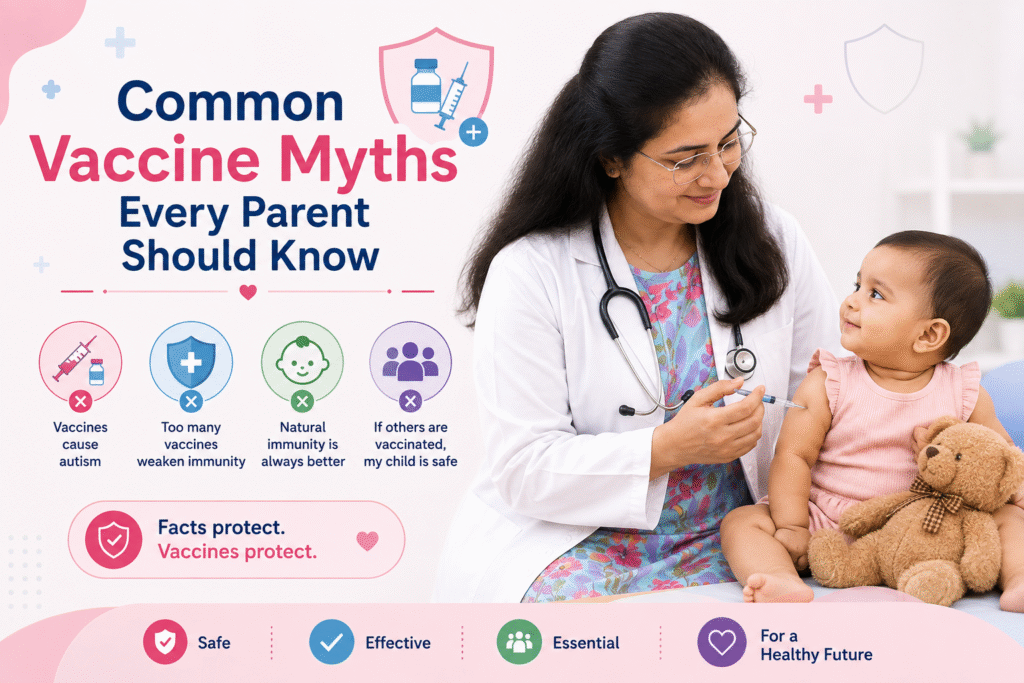
Vaccines are among the most effective medical interventions in history, credited with saving millions of lives and eradicating or drastically reducing diseases that once devastated entire generations of children. Despite overwhelming scientific evidence supporting their safety and effectiveness, vaccine myths and misinformation continue to circulate often causing unnecessary fear and hesitation among parents. Understanding the facts behind these common myths can help you make confident, informed decisions about your child’s immunization schedule.
Myth 1: Vaccines Cause Autism
This is perhaps the most persistent and widely debunked vaccine myth. It originated from a single, deeply flawed 1998 study that was later retracted after being found fraudulent, with its author eventually losing his medical licence. Since then, numerous large-scale studies involving millions of children worldwide have found absolutely no link between vaccines including the MMR vaccine and autism. Autism is now understood to have genetic and neurological origins that begin developing well before a child receives any vaccination.
Myth 2: Natural Immunity Is Better Than Vaccine-Induced Immunity
While it is true that surviving certain infections can provide immunity, the risks associated with acquiring natural immunity are far greater than the risks of vaccination. Diseases like measles, whooping cough, and diphtheria can cause severe complications, permanent disability, or even death all risks that vaccines eliminate. Vaccines are designed to train the immune system to recognise and fight specific pathogens without the child ever having to endure the actual, often dangerous, illness.
Myth 3: Too Many Vaccines Overwhelm a Baby’s Immune System
A baby’s immune system encounters and responds to countless bacteria and viruses every single day simply through normal life far more than the antigens present in the entire recommended vaccine schedule combined. Scientific research confirms that a child’s immune system is fully capable of handling multiple vaccines at once without being weakened or overwhelmed. Spacing out or delaying vaccines, as some parents attempt to do, only leaves children unprotected for longer periods without any proven safety benefit.
Myth 4: Vaccine-Preventable Diseases Are No Longer a Threat
Because vaccines have been so successful, many parents today have never witnessed the devastating effects of diseases like polio, measles, or diphtheria leading some to believe these illnesses are no longer a real threat. However, these diseases still exist and can spread rapidly in unvaccinated populations. Outbreaks of measles and whooping cough have occurred in various parts of the world in recent years, often linked directly to declining vaccination rates. Vaccines remain essential precisely because they keep these diseases at bay.
Myth 5: Vaccines Contain Harmful Toxins
Concerns about ingredients like formaldehyde, aluminium, or thimerosal in vaccines often circulate online, but these ingredients are present in extremely small, scientifically tested, and completely safe quantities. Formaldehyde, for example, is naturally produced by the human body in far greater amounts than what is found in a vaccine dose. Every vaccine ingredient undergoes rigorous safety testing and regulatory approval before being used, and ongoing monitoring continues even after a vaccine is approved for use.
Myth 6: A Healthy Diet and Lifestyle Are Enough Protection
Good nutrition and a healthy lifestyle certainly support a strong immune system, but they cannot provide the same specific, targeted protection that vaccines offer against particular diseases. No amount of healthy eating can teach the immune system to recognise the measles virus or whooping cough bacteria in advance. Vaccines and healthy living work together, not as substitutes for one another, to give children the best possible protection against preventable illness.
Myth 7: Mild Side Effects Mean the Vaccine Is Unsafe
Mild side effects such as a low-grade fever, soreness at the injection site, or slight fussiness are simply signs that the immune system is responding appropriately they do not indicate the vaccine is unsafe or harmful. Serious adverse reactions are extremely rare and are closely monitored by health authorities worldwide. If you have any concerns about a reaction after vaccination, it is always best to consult a trusted Pediatrician in Palam Vihar Gurgaon who can address your concerns accurately and reassure you based on your child’s specific health profile.
Myth 8: You Can Simply Skip Vaccines If Others Are Vaccinated
This idea, often called relying on “herd immunity,” is risky and unreliable at an individual level. Herd immunity only works when vaccination rates remain consistently high across the population and it offers no guaranteed protection to any single unvaccinated child, who remains fully vulnerable to infection. Relying on reputable Child Care Services in Gurgaon for accurate, science-based vaccination guidance is a far safer approach than depending on the immunity of others to protect your own child.
Conclusion
Misinformation about vaccines can create unnecessary fear and put children at real, preventable risk. The scientific consensus remains overwhelmingly clear vaccines are safe, effective, and essential for protecting children from serious, sometimes life-threatening diseases. Always rely on credible medical sources and your child’s doctor for accurate information, rather than unverified claims circulating online or through word of mouth.
At Gaur Child Care Clinic, Dr. Sonali Gaur takes the time to address every parent’s questions and concerns about vaccinations with patience, clarity, and evidence-based guidance. If you have doubts or hesitations about your child’s immunization schedule, the clinic offers a supportive, judgement-free space to get the accurate answers you need for your child’s health and safety.