
Why Do Children Get Frequent Mouth Ulcers? Causes Parents Should Know
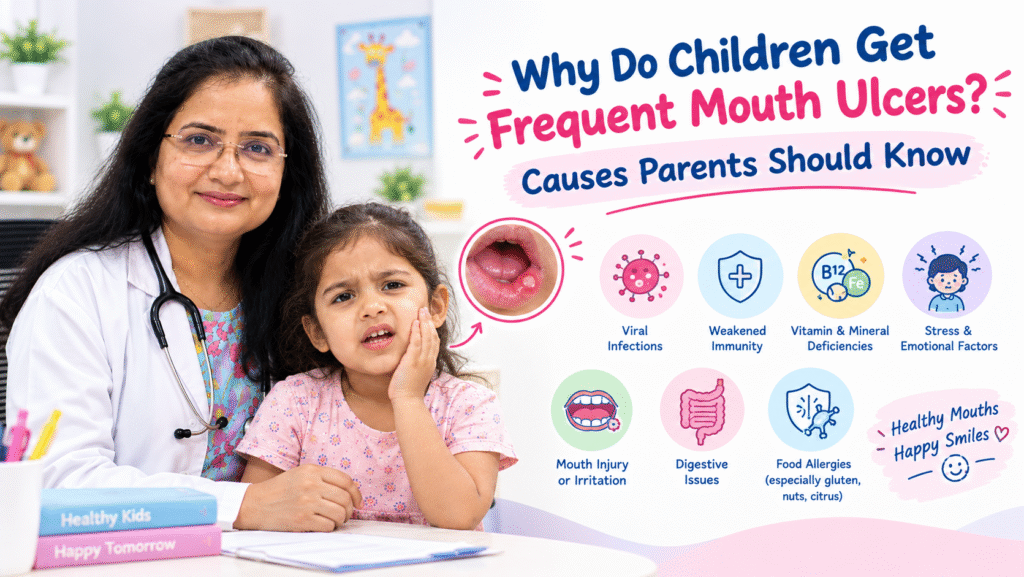
A child who suddenly refuses dinner, drools more than usual, or winces at the first sip of juice often has a small, painful sore somewhere inside the mouth. Mouth ulcers are very common in childhood, and most of them heal without treatment. When they keep returning, though, parents naturally start wondering what is behind them. Knowing the usual causes makes it easier to respond calmly and spot the rare cases that need attention.
What a Mouth Ulcer Looks Like
Most ulcers are small, round or oval, with a white or yellowish centre and a red border. They tend to appear on the inner cheeks, lips, tongue, or gums, and they sting when touched by food or drink. A single minor ulcer usually settles in seven to ten days. Children rarely describe the pain well, so a sudden change in eating habits is often the first clue.
Small Injuries Inside the Mouth
The simplest explanation is often the right one. Children bite their cheeks while chewing or talking, scrape the gum with a hard toothbrush, or get poked by a sharp piece of toast or a chip. Braces, retainers, and rough dental edges can rub the same spot again and again, setting up a cycle of repeat sores in exactly the same place.
Viral Infections
Several common childhood viruses cause painful sores in the mouth, usually along with fever. Hand, foot and mouth disease brings blisters on the palms and soles as well. Herpangina produces ulcers at the back of the throat, while the herpes simplex virus can trigger widespread gum soreness in younger children. These infections spread easily in nurseries and schools, and children generally recover within about a week.
Gaps in Nutrition
Children who eat a narrow diet may fall short on iron, vitamin B12, folate, or zinc, and low levels of these nutrients are linked with recurring ulcers. Picky eaters, children on strict vegetarian meals without proper planning, and those with poor absorption are most at risk. Fixing the gap through food, or supplements when advised, can noticeably reduce how often the sores return.
Food Triggers and Mouth Products
Acidic or spicy foods such as citrus fruits, tomatoes, pickles, and very salty snacks can irritate the lining of the mouth and set off ulcers in sensitive children. Some kids also react to certain toothpastes, especially those containing sodium lauryl sulphate. Switching to a milder paste and keeping a short food diary can help reveal a pattern worth acting on.
Stress, Family History and Immunity
Recurring ulcers tend to run in families, so a parent who had them as a child often has a child who gets them too. Emotional stress during exams or changes at school, a recent illness, and tiredness can also bring them on. In a small number of children, ongoing ulcers point to conditions such as coeliac disease or inflammatory bowel problems, which is why persistent cases deserve a proper check.
Easing Discomfort at Home
Soft, bland foods like curd, mashed banana, khichdi, and cool milk are easier to swallow. Cold water or an ice lolly can numb the area, while spicy, salty, and sour foods are best avoided for a few days. Older children can gargle with lukewarm salt water. A soft brush, gentle brushing, and plenty of fluids help prevent dehydration, since children sometimes drink less when the mouth hurts.
When to Seek Medical Help
An ulcer that lasts beyond two weeks, unusually large sores, ulcers returning every month, high fever, difficulty drinking, signs of dehydration, or weight loss should be checked without delay. Searching for a Child specialist near me is a reasonable first step, since a proper examination can sort out whether the cause is a simple injury, a deficiency, or something that needs further tests.
Conclusion
Mouth ulcers are an irritating but usually harmless part of growing up, and most clear up quickly with comfort measures and patience. When they keep coming back, looking for patterns in diet, habits, and family history often points to the answer. Dr. Sonali Gaur, widely regarded as the Pediatrician in Palam Vihar Gurgaon, often advises parents that repeated ulcers are worth a conversation sooner rather than later, because a small fix in diet or routine can bring lasting relief.