
Screen Time Guidelines for Children: What Parents Need to Know
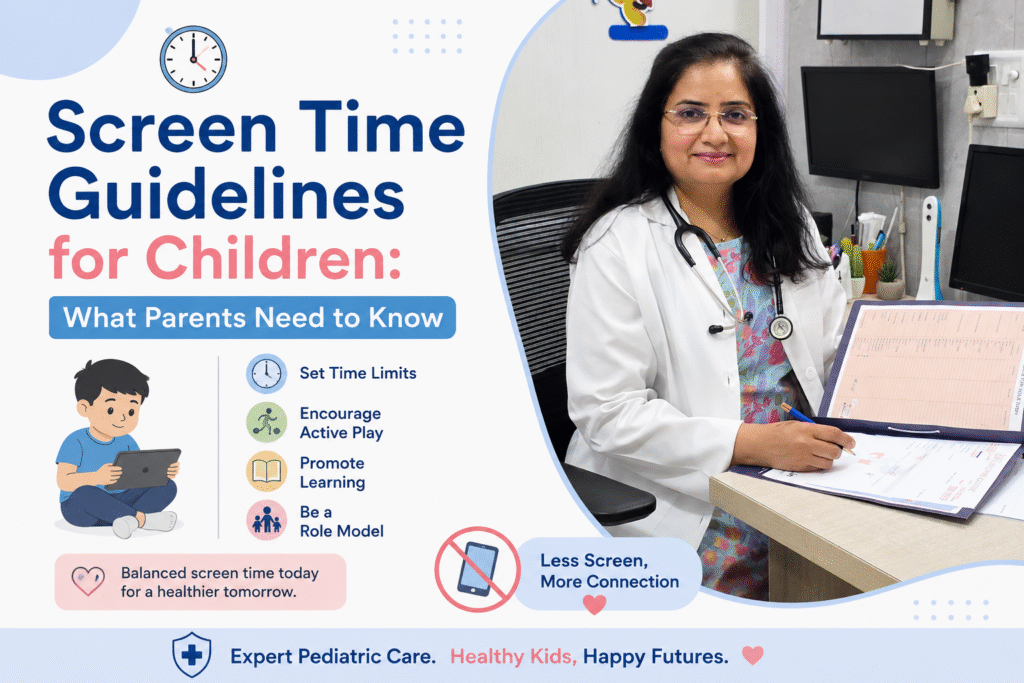
In today’s digital world, screens have become a part of everyday life. From online learning and educational apps to entertainment and social interaction, children are spending more time in front of screens than ever before. While technology offers many benefits, excessive screen time can affect a child’s physical health, sleep quality, behavior, and overall development. Understanding the right balance is essential for every parent.
Why Managing Screen Time Matters
Too much screen exposure can have a negative impact on children’s health. Studies have linked excessive screen use to issues such as poor sleep, reduced physical activity, eye strain, obesity, and difficulties with concentration. Younger children are particularly vulnerable because their brains are still developing.
The goal is not to eliminate screens completely but to create healthy habits that allow children to benefit from technology without compromising their well-being.
Recommended Screen Time by Age
Children Under 18 Months
Screen time should generally be avoided except for video chatting with family members. At this age, children learn best through direct interaction with parents and caregivers.
Children 18 to 24 Months
If parents choose to introduce digital media, they should select high-quality educational content and watch it together with their child to help them understand what they are seeing.
Children 2 to 5 Years
Screen time should ideally be limited to one hour per day of high-quality programming. Parents should actively participate and discuss the content with their children whenever possible.
Children 6 Years and Older
Parents should establish consistent limits on screen use while ensuring that technology does not interfere with sleep, physical activity, homework, family time, or social interactions.
Signs Your Child May Be Getting Too Much Screen Time
Parents should monitor their child’s behavior for warning signs such as:
- Difficulty sleeping or irregular sleep patterns
- Reduced interest in outdoor activities
- Frequent eye strain or headaches
- Irritability when devices are taken away
- Trouble focusing on schoolwork
- Reduced social interaction with family and friends
Recognizing these signs early can help parents make necessary adjustments before screen habits become problematic.
Tips for Healthy Screen Use
Create Screen-Free Zones
Designate areas such as dining tables and bedrooms as screen-free spaces. This encourages family interaction and promotes better sleep habits.
Encourage Outdoor Activities
Physical activity is essential for healthy growth and development. Encourage children to play outside, participate in sports, or engage in creative hobbies that do not involve screens.
Set a Good Example
Children often imitate their parents’ behavior. Limiting your own screen use and prioritizing family time can help reinforce healthy habits.
Follow a Daily Routine
Establish clear rules regarding when and how long screens can be used. Consistency helps children understand expectations and reduces conflicts.
Prioritize Educational Content
When children do use screens, choose age-appropriate and educational content that supports learning and development rather than passive entertainment.
Avoid Screens Before Bedtime
Exposure to screens before sleep can interfere with melatonin production and make it harder for children to fall asleep. It is best to avoid screens at least one hour before bedtime.
The Importance of Parent Involvement
Parents play a crucial role in guiding their children’s digital habits. Open communication about online safety, responsible technology use, and balanced lifestyles can help children develop healthy relationships with digital devices.
Regular monitoring and participation in your child’s online activities can also help ensure that the content they consume is appropriate and beneficial.
When to Seek Professional Advice
If excessive screen use is affecting your child’s sleep, behavior, academic performance, or overall health, it may be helpful to consult a healthcare professional. A qualified Pediatrician in Palam Vihar can assess your child’s development and provide personalized recommendations for managing screen time effectively.
Parents seeking expert guidance from a trusted Child Specialist in Palam Vihar can benefit from professional advice tailored to their child’s specific needs and age group.
Conclusion
Technology is an important part of modern life, but balance is key. By setting healthy boundaries, encouraging physical activity, and staying actively involved in their child’s digital experiences, parents can ensure that screen time remains a positive tool rather than a source of health concerns. For expert child healthcare guidance and developmental support, Dr Sonali Gaur at Gaur Child Care Clinic is committed to helping children grow healthy, happy, and strong.